What to wear and bring to the snow monkeys
The day has two climates. Inside the coach or car it is warm enough for a T-shirt, and at the pool a winter morning can sit near 23 °F (-5 °C) with a wet, icy trail underfoot. This guide lists what to wear and carry for the snow months, what changes in summer, and what to leave at the hotel in Tokyo.
Two climates in one day
You will spend 7 hours or more of a snow monkey day in a heated coach or car and perhaps 2 hours outside, most of it walking. Dress for both with layers you can shed. Start with a thermal base layer. Add a fleece or wool mid layer, then a windproof, waterproof shell over the top, and you are covered for a morning near 23 °F (-5 °C) at the trailhead and a bus that runs warm. Jeans soak through in slush and stay wet all the way back to Tokyo; lined or softshell pants do better, with thermal leggings underneath on the coldest days.
The valley sits at about 2,800 ft (850 m) and holds snow from December into March, when daytime highs stay around 32–37 °F (0–3 °C). The best time to see the snow monkeys explains how the weather shapes the bathing, and this guide assumes a winter trip unless it says otherwise.
Boots and cleats for the trail
Count on about 1 mile (1.6 km) of cedar forest each way from the Kanbayashi Onsen parking, with staircases, spring mud and packed winter ice underfoot. It takes 25–40 minutes. Waterproof boots with a deep tread matter more than any other item. Sneakers end the day wet and cold, and a reviewer on the H.I.S. coach described rain turning the path to mud.
Over the boots, wear crampons or rubber ice cleats that stretch across the sole. The H.I.S. coach sells crampons on board, and reviewers of the private cars mention renting boots and grips near the park. Put them on before the first icy stretch rather than after the first slip, and take them off before you climb back into the vehicle. Our guide to the park describes the trail in detail. JTB's route in from the Roman Museum is longer, close to 50 minutes a leg, and its listing warns of hard walking.
Hands, head and eyes
- Hat and gloves. A warm hat that covers the ears, and gloves you can work a camera in. Thin liner gloves under mittens do the job;
- Hand warmers. Disposable warmers are sold in convenience stores all over Tokyo for a few hundred yen. One in each pocket covers the two hours outside;
- Sunglasses. Snow in sunshine is blinding, and the gorge opens up at the pool. Bring them even in midwinter;
- Scarf or neck gaiter. It closes the gap at the collar on the walk in and goes into the bag at lunch.
The day bag
Keep it small. The trail has no lockers, the park asks you to keep food out of sight, and a bulky pack makes the stairs harder. A daypack of 15–20 liters is plenty, and on the private cars anything you do not need at the pool can stay in the vehicle.
- Yen in cash. Park entry is about ¥800 per adult and ¥400 per child, included on the H.I.S. coach and the JTB tour but paid at the gate on the private cars. The small cafe at the entrance, where reviewers praise the apple pie, is easier with coins and small notes;
- Food out of sight. Snacks go inside the bag, zipped, and nothing edible travels in a plastic bag in your hand. A JTB reviewer was told to carry no food at all on the walk in. Eat at the lunch stop or in the cafe;
- Water. A small bottle. Luxurious Travel Master's car stocks drinks, from water to tea and coffee, and the coach makes 2–3 service-area stops each way where you can buy more;
- A towel. Only if your tour stops at Shibu Onsen or you plan a footbath. Tours 3 and 4 can add Shibu Onsen (40–90 minutes), and a reviewer's group bathed there. Yadoroku's Nagano-start tour, from ~$130, fits a Shibu Onsen visit and a soba lunch into 6–7 hours; you get yourself to Nagano by Shinkansen first, which is the catch;
- Tissues and a zip bag. The bag takes the wet cleats on the way back.
Camera, phone, no selfie stick
The monkeys are close, often within a few feet, so a phone camera does well at the pool. For a face in the steam a camera with a zoom lens helps, since you are asked to keep your distance. Put the phone in a strap or a lanyard. Gloved hands drop things, the rocks around the pool are wet, and the pool itself is not a place to fish anything out of. Cold drains batteries fast, so keep a spare in an inside pocket.
Selfie sticks are banned near the monkeys, as are drones anywhere in the park. Do not stare into a macaque's eyes while framing a shot; it reads as a threat. Reviewers describe monkeys walking straight through the crowd, so stand still and let them pass. Why the snow monkeys bathe explains the behavior you are photographing.
A trunk for the spare layers
The per-person private car collects you at your Tokyo hotel, carries whatever you do not need on the trail and gives you about 2 hours at the park with one Nagano stop after it, from ~$127 per person. Park entry (about ¥800) and lunch are extra, and cancellation is free up to 24 hours before.
Summer and the shoulder months
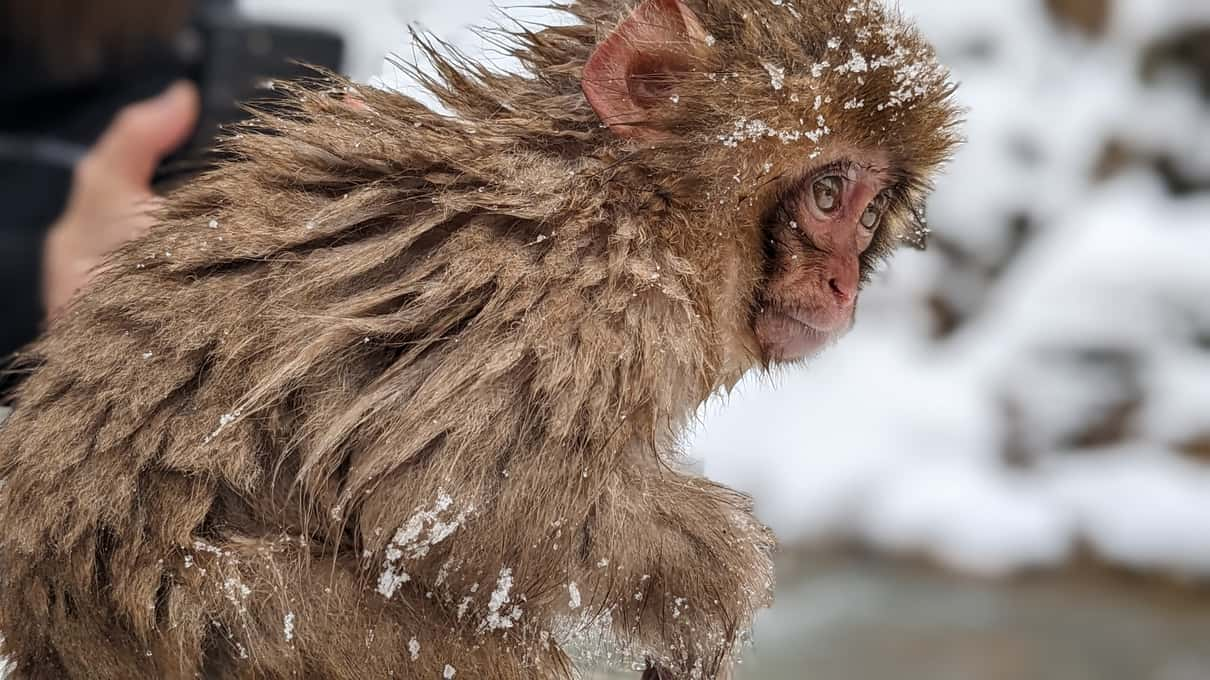
From late April the snow is gone and the trail turns to mud, then dust. Summer highs reach about 82 °F (28 °C) in the valley, and the forest is humid. Swap the cleats for trail shoes with grip, and pack a light rain jacket, bug spray, a sun hat and water. The walk is the same length, and the stairs feel longer in heat. The monkeys are usually around the pool but rarely in it in warm weather, so plan the camera for faces and babies rather than steam. Spring babies arrive from about late April, which families with children may prefer to a frozen trail.
Packing for a long day in a car
The private cars run 10–12 hours door to door, with 3.5 hours or more of driving each way, and the coach runs about 13. Bring a charger cable (tour 4 has a WiFi hotspot, tour 3 offers WiFi on request), a neck pillow and snacks for the road. Luxurious Travel Master's customisable car, from ~$535 per group, has room for all of that in a Vellfire or Crown. The same provider's Togakushi version, from ~$522 per group, adds the cedar-lined shrine; its catch is the clock, since recent reviewers counted 13 hours on the road for an hour with the monkeys and an hour at a temple. Private snow monkey tours compares both cars.
What to leave in Tokyo
- Big luggage. Leave it at the hotel. The trail has no lockers, and the stairs are no place for a wheeled bag;
- Strollers. The path is unpaved with steps, so strollers do not work on it. Carry small children in a carrier;
- Drones and pets. Both are banned in the park;
- Street shoes. Leather soles and fashion boots on packed ice are the fastest way to a fall;
- Food in see-through bags. Anything edible travels inside a closed pack.
The price of the small things, from cleats to the gate fee, sits in what a snow monkey tour costs, and the three ways from Tokyo tells you how long you will be wearing it all.